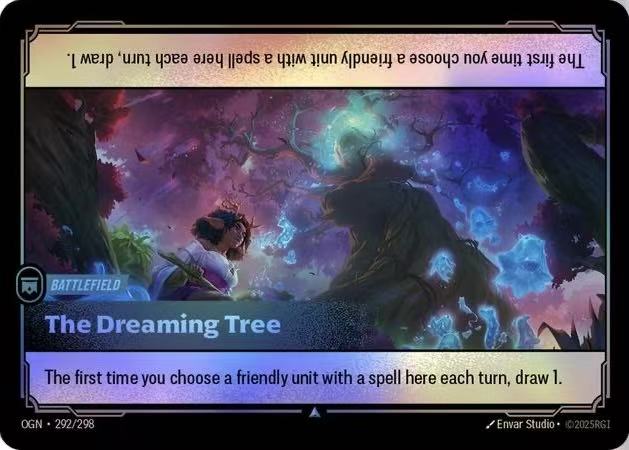

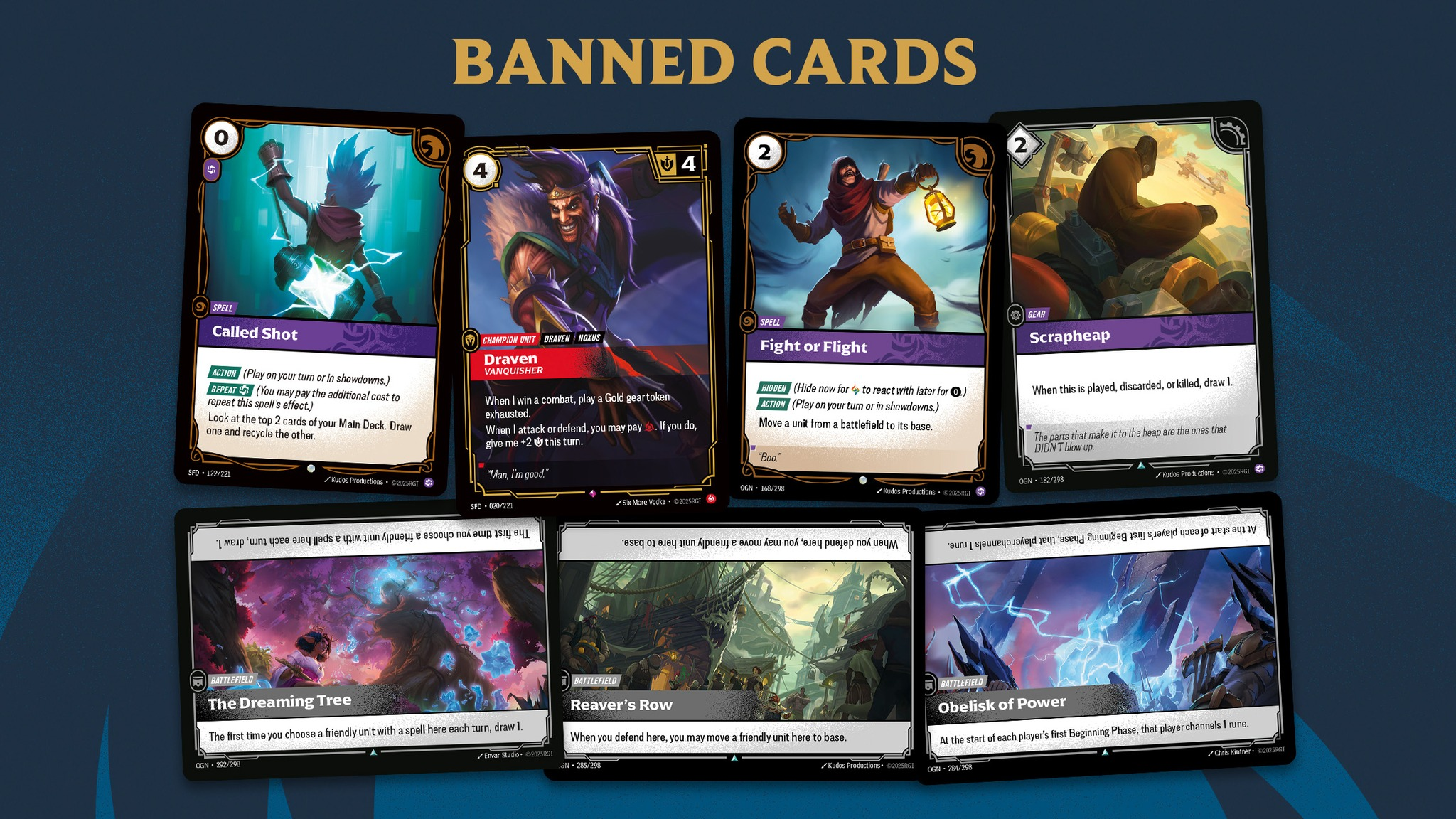
In the early morning of March 31, 2026, Riftbound: League of Legends Trading Card Game officially announced the first ban list since the game’s launch, banning 7 cards at once (Called Shot, Draven, Fight or Flight, Scrapheap, Reaver’s Row, The Dreaming Tree, Obelisk of Power), and declared that it would take effect immediately on the same day without any transition period notice.
Coinciding with the upcoming release of the game’s third set “Unleashed” (adding more than 200 new cards), the launch of such a large-scale ban adjustment immediately triggered extensive discussions in the player community—some recognized the official’s original intention of balancing the environment, while many players questioned the ban method and adjustment details. Combining official statements, player feedback and blogger analysis, this article will objectively analyze the pros and cons of this ban from a neutral perspective, explore the unreasonable aspects in the official operation, and provide a rational reference for both players and the official.
I. Reasonable Aspects of This Ban: Precisely Combating Chaos and Aligning with the Original Intention of Balancing
As mentioned in the official statement, this ban was based on long-term data monitoring and rigorous evaluation, with the core purpose of optimizing the competitive environment, breaking the meta monopoly, and improving the player’s in-game experience. From the perspective of actual adjustment effects and industry logic, some ban decisions are indeed in line with this original intention and have been recognized by most players and bloggers.
First of all, it precisely curbs the excessive dominance of the purple archetype. Since the launch of the second set “Spiritforged”, the game environment has presented a pattern of “one superpower and many strong ones”. The purple archetype, relying on its powerful draw engine and core cards, has almost monopolized the mainstream decks in tournaments at all levels. Whether it is Draven, Ezreal, or Irelia decks, they all highly depend on the core cards banned this time. Banning Called Shot and Scrapheap directly dismantles the core operation logic of Miracle decks, effectively weakens the draw advantage of the purple archetype, and avoids the bad in-game experience of “the opponent spends five minutes drawing cards in one turn while you have nothing to do”, which is highly consistent with the designers’ emphasis on “optimizing the competitive experience and preventing meta stagnation”.

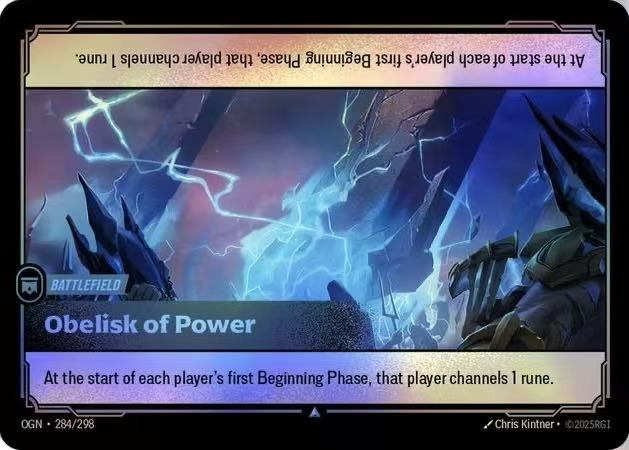
Secondly, it regulates the excessive abuse of battlefield cards and improves environmental diversity. The three battlefield cards banned this time—Reaver’s Row, The Dreaming Tree, and Obelisk of Power—are all cards with extremely high usage rates in the current environment: Reaver’s Row infinitely amplifies the advantage of the first move and weakens combat interaction; Obelisk of Power can achieve early mana acceleration at the start, allowing slow decks to quickly transition to their strong turns, and it has almost become a must-have card for mainstream decks; The Dreaming Tree is a highly versatile draw battlefield, especially suitable for decks with many spells, further amplifying the draw ability of purple and blue. Banning these three battlefield cards not only breaks the monopoly of battlefield cards but also provides room for other unpopular battlefield cards to appear, which is in line with the official’s core goal of “breaking the meta monopoly”.
Finally, it avoids potential future environmental risks in advance. According to the designers’ explanation, this ban is not only aimed at the current environment but also to curb the synergetic snowball effect of some cards after the launch of the third set—the new Void archetype and various spell variants added in the third set may form overly powerful combinations with the cards banned this time. Banning them in advance can nip balance problems in the bud, reflecting the official’s consideration for the long-term health of the environment.
II. Controversial Aspects of This Ban: Accidentally Harming Weak Decks and Lack of Buffer in Adjustment
Although the core intention of the ban is worthy of recognition, from the perspective of player feedback and actual impact, this adjustment still has many controversies, and some decisions even cause unnecessary “collateral damage” to the environment, affecting the gaming experience of some players.
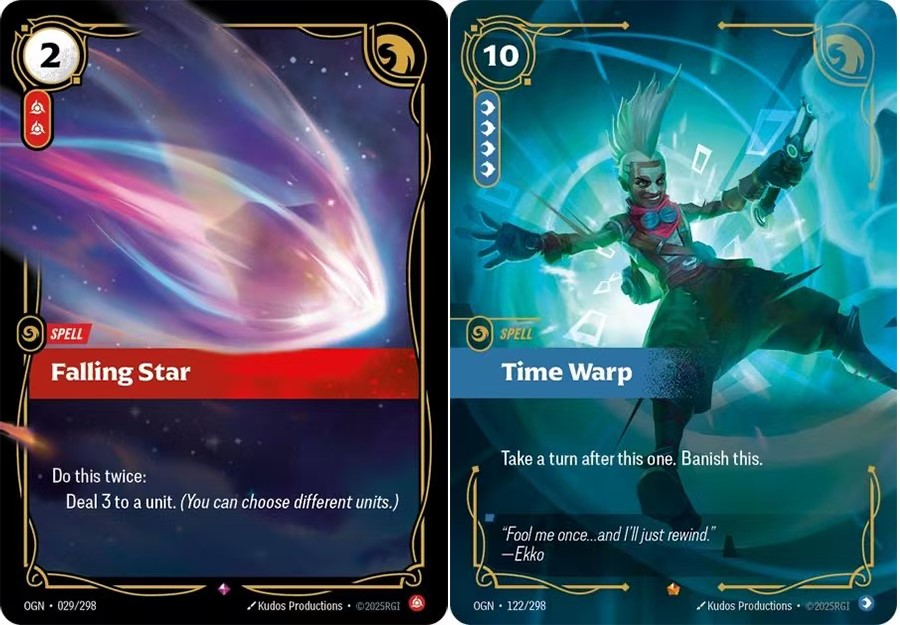
First, it accidentally harms weak purple decks, and the scope of regulation is not precise enough. This ban mainly targets the strong purple Miracle decks and Draven archetype, but it also inadvertently affects the already weak purple decks.while the generally recognized powerful single cards such as Falling Star and Time Warp are not restricted. The scope of regulation is not complete, and the goal of “balancing the environment” has not been fully achieved.
First, it accidentally harms weak purple decks, and the scope of regulation is not precise enough. This ban mainly targets the strong purple Miracle decks and Draven archetype, but it also inadvertently affects the already weak purple decks.while the generally recognized powerful single cards such as Falling Star and Time Warp are not restricted. The scope of regulation is not complete, and the goal of “balancing the environment” has not been fully achieved.
Second, the ban intensity is too radical, lacking gradient buffer. As an emerging TCG game that has only been launched for eight months and has only released two expansion sets, the official banned 7 cards at once, and adopted the “direct ban (0 cards available)” model instead of the conventional TCG industry “restricted use (1-2 cards)” model, which is too radical. Especially for casual TCG players who have never been exposed to ban lists, directly banning core cards is equivalent to directly declaring that their carefully constructed decks are scrapped, and it is difficult for them to accept this gap. Many players and bloggers have suggested that if the official adopts the “quantity restriction” method, it can not only weaken strong decks but also retain players’ deck construction space, reducing unnecessary dissatisfaction.
Third, the ban on the eve of the third set’s release has raised players’ doubts about the strength of the new cards. This ban coincides with the upcoming release of the third set. At this time, the large-scale ban of core cards inevitably makes players guess “whether the official lacks confidence in the strength of the new cards”—worrying that the new cards cannot balance the existing environment and can only pave the way for the new cards by banning old ones. In addition, some players originally planned to play decks such as Annie and Aurora Sivir in the third set, but the ban on Called Shot completely destroyed Aurora’s draw consistency, leading to the disappointment of players’ expectations and further intensifying their dissatisfaction.
III. Unreasonable Aspects of Official Operations: Lack of Notice and Deprivation of Players’ Right to Choose
The biggest controversy caused by this ban is not the ban itself, but the official’s operation method—no advance notice and immediate effect on the day of announcement, which is contrary to the conventional operation of the TCG industry and completely deprives players of their right to choose independently.
Looking at mature TCG games such as Yu-Gi-Oh!, the release of ban lists has a clear notice cycle (for example, Yu-Gi-Oh! usually informs the release time of the ban list in advance, allowing players sufficient time to adjust their decks). Players can make advance judgments based on the notice, choose to temporarily quit the game to avoid risks, adjust their decks, or continue to invest. However, this ban on Riftbound came out of nowhere. The official neither informed in advance that “a ban list will be released recently” nor explained the scope of the ban. It only suddenly announced the ban in the early morning of March 31 and took effect immediately, catching players off guard. Previously, Dave Guskin, the game director, made vague remarks on his personal social media and did not clearly state whether a ban list would be released at the end of the month, which further aggravated the passive situation of players.
This “sudden ban” operation essentially deprives players of their right to choose independently: players cannot adjust their decks in advance, and some decks that rely on banned cards are directly scrapped; the decks that have invested a lot of energy and cost are instantly devalued. Especially for physical TCG players, the collection and use value of the cards are affected. As players said, “I don’t know when the next cut will come or who will be cut? This kind of unknown punishment makes its authority unpredictable, and I can’t afford to play.” In addition, the official only mentioned that the deck submission function and card catalog of the mini-program will be updated “in the next few days” after the ban, which further highlights the lack of operational preparation and makes players feel that their demands are not fully valued.
IV. Conclusion: The Road to Balance Is Long, and Operations Need More Empathy
It is undeniable that the original intention of this ban on Riftbound is worthy of recognition—as an emerging TCG game, facing problems such as the monopoly of the purple archetype, meta stagnation, and poor in-game experience, taking timely action to adjust reflects the official’s determination to maintain the long-term health of the game. Moreover, some ban decisions have indeed precisely combated environmental chaos and cleared some balance obstacles for the launch of the third set.
But at the same time, this ban also exposes the official’s deficiencies in balance adjustment and operation: the ban intensity is too radical, accidentally harming weak decks, and the scope of regulation is not complete; the lack of advance notice and buffer period deprives players of their right to choose independently and hurts the gaming enthusiasm of some players; the timing of the ban on the eve of the third set’s release has also raised players’ doubts about the strength of the new cards.
For TCG games, balance is the core and operation is the key. Mature TCG operation must not only dare to adjust the imbalanced environment but also take into account the players’ experience and demands—announcing the ban list in advance, adopting the gradient ban/restriction model, accurately avoiding collateral damage, and responding to players’ feedback in a timely manner are all areas that the official needs to improve. After all, the development team of Riftbound is from Legends of Runeterra, and players have reason to believe that they do not deliberately create differences in card strength for profit purposes, but hope to create a competitive environment where a hundred flowers bloom.
This ban is only the first step on Riftbound’s road to balance. It is hoped that the official can face up to players’ reasonable doubts, optimize the operation method, be more cautious and transparent in subsequent adjustments, and balance both balance and players’ experience. It is also expected that the new cards in the third set can bring more diverse deck choices, allowing all kinds of legendary cards to have the opportunity to play, and truly realize the game vision of “may your conquests be unstoppable and your defenses unbreakable”. For players, it is also advisable to view this adjustment rationally. After all, banning cards is a normal part of TCG games. Only through reasonable communication and rational feedback can we promote the better development of the game.
Below is a detailed analysis of each of the 7 banned cards, focusing on my subjective evaluation, the actual impact of the ban, and the rationality of the ban decision:
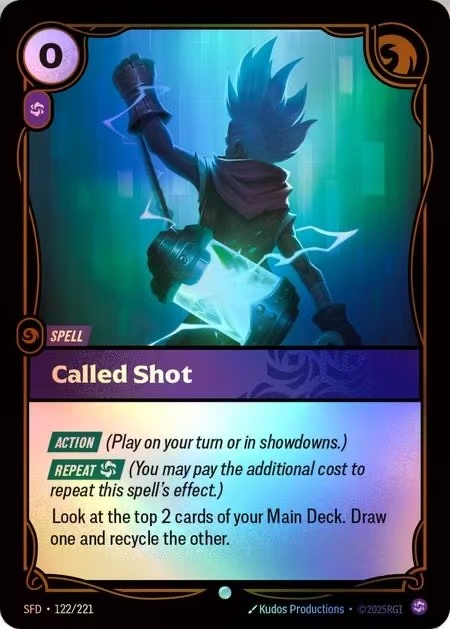
1. Called Shot
I believe this ban is well-deserved, as it is an overly powerful card draw card—even stronger than classic TCG draw cards like Pot of Greed. Back in Set 2, Called Shot could already achieve the effect of “0 Rune to look at 4 cards and draw 2″—while Pot of Greed can only draw 2 cards, Called Shot allows players to view 4 cards first and then draw 2, which greatly enhances the consistency and resource advantage of the deck. I even think it is likely there will be no better card draw card than this in a long time. The ban of Called Shot directly dismantles the core operation logic of all Miracle decks, dealing a heavy blow to Draven, Ezreal and other related decks. In addition, it also indirectly reduces the draw probability of Aurora, which relieves the annoyance of players who are often harassed by opponents spamming Aurora on curve.
2. Draven
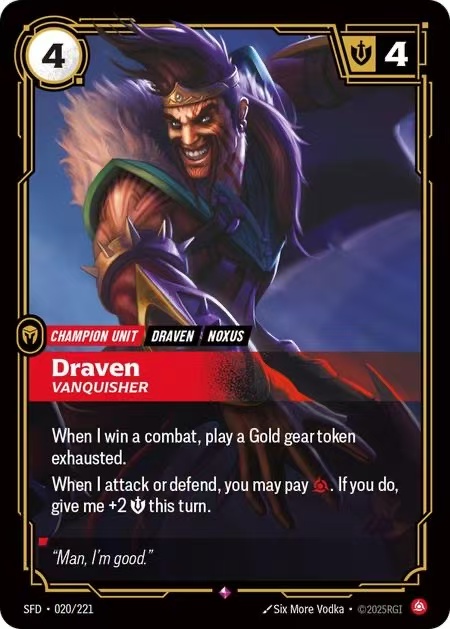
I clearly believe this card deserved to be banned. For unit cards in Riftbound, every +2 stats is a qualitative change—usually, a 3-Rune unit has 4 power, and a 5-Rune unit has 6 power, which follows the 2-4-6-8 curve rule that new players are familiar with, ensuring fair interaction between both sides. However, red Draven, as a 4-Rune unit with no Rune refund, can reach 6 power when the opponent plays a 4-power unit, forcing the opponent to use a 4/4 unit plus a trick to deal with a 6/6 unit plus a trick. Except for Irelia and Kai’Sa, most decks have no effective way to counter this card. Although the faster ambush speed in Set 3 will indirectly alleviate the Draven problem, I still believe that banning this card is completely reasonable.
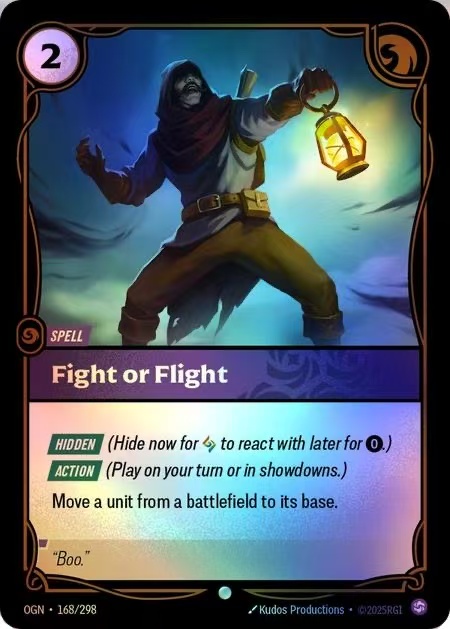
3. Fight or Flight
Fight or Flight being included in the first set is entirely a design oversight from the developers. Riftbound is fundamentally a game about contesting battlefield positions—directly removing one of the opponent’s high-value units almost guarantees you win the combat and secure a crucial point. Not only that, this card can also protect your own high-value units, and its synergy with Draven’s snowballing potential is incredibly strong. What’s more, as a Standby card, it only costs a small amount of Rune or gold to activate. High-cost characters with no enter-the-battlefield effect are basically heavily countered and suffer badly: you can use it to retreat with synergies, and a single activation can render a huge number of cards completely ineffective.
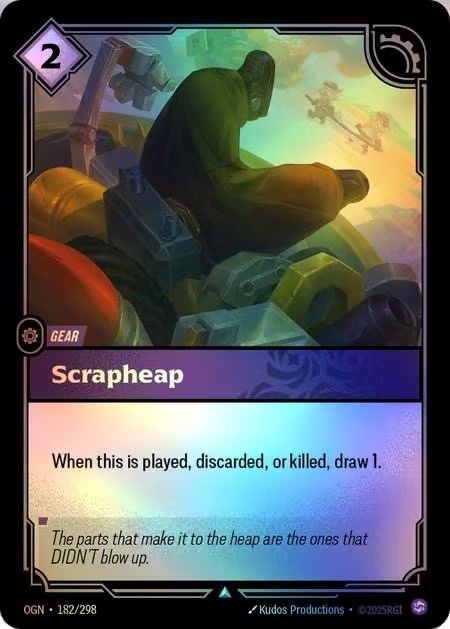
4. Scrapheap
Scrapheap itself is not very strong in terms of single-card power, but there are many discard methods in the current meta, which has greatly increased the value of this card, making it equivalent to drawing a free card. Purple’s card draw ability is extremely terrifying, and this card leverages the discard pile mechanics, so all discard archetypes will consider including it. However, I did not expect it to be banned.There are some hand disruption cards in Set 3, and Scrapheap can even counter these cards.
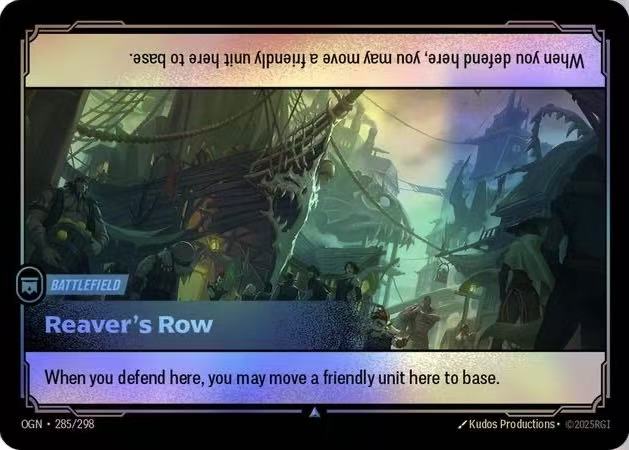
5. Reaver’s Row
I describe this battlefield card as a “cheap, cheesy” card, but I also acknowledge that it is not unreasonably strong. With Reaver’s Row, the first player can spam units without saving mana—when not playing against Kai’Sa, they can retreat when taking damage; if the opponent does not save mana, they have to retreat when attacked; if the opponent saves mana, the first player can switch to another battlefield to outlast them. I believe this card is only particularly strong against pure tank decks and has counters. Its ban is largely “killed by Draven”—because it is often paired with Draven decks to amplify advantages, and its ban also indirectly affects Irelia and Kai’Sa decks, making them take a small hit. Overall, I think it’s acceptable for this card to be ban.
6. Obelisk of Power
This is the ban I consider the most reasonable. Casual players may not realize how broken this card is: first, it can disrupt the first player’s mana—since many cards in the game cost even Rune, suppressing the first player’sRune often leaves them with 1 unused Rune; second, for the second player, it allows them to directly play a 4-Rune unit, enabling 4-power units to win battles without tricks (unlike 2-power units that need tricks to win); third, it enhances deck thickness—late game, new players might get bad draws with 2/2 units, but if you’re playing second with Obelisk of Power, your deck only has 4/4 units, so your deck is naturally better than the opponent’s. Basically, with this card and some deck adjustments, you can replace all low-stat units, giving you a natural resource advantage late game. By the end of Set 2, the meta was basically about whether your deck could deal with Obelisk of Power when playing second.
7. The Dreaming Tree
I think this ban is both unreasonable and reasonable.From Set 1 to Set 2, as long as the deck I use lacks card draw but has some spell cards, I will almost blindly choose The Dreaming Tree. For decks with a lot of spells like Irelia, The Dreaming Tree is really too strong—it provides strong sustainability. Considering that Riftbound is increasingly focusing on spell combat, the card draw benefits brought by The Dreaming Tree will become higher and higher. An overly versatile card is naturally banned, but after this card is added to the ban list, some fringe decks will suffer badly—orange and yellow decks really have no card draw options at all.